
The Best Fluffy Pancakes recipe you will fall in love with. Full of tips and tricks to help you make the best pancakes.
Do you dream of enjoying a rich, velvety Italian treat right in your own kitchen? Many people believe that crafting authentic frozen desserts requires expensive, bulky machinery. However, you can achieve professional-quality results using simple tools you already own.
Creating homemade gelato is an accessible project that rewards you with a dense, silky texture. By mastering a few basic techniques, you will unlock the secret to a perfect chilled delicacy. This guide serves as your comprehensive roadmap to success.
You do not need a fancy ice cream maker to impress your friends and family. With just a bit of patience and high-quality ingredients, your homemade gelato will become a staple in your dessert rotation. Let’s start this delicious journey together.
Table of Contents
- You can make authentic Italian-style frozen desserts without specialized equipment.
- Focusing on high-quality ingredients is the secret to a superior, silky texture.
- Simple manual techniques provide the same density as professional machines.
- This process is an affordable and fun way to elevate your home cooking.
- Mastering these steps allows for endless flavor customization in your own kitchen.
Understanding the Art of Authentic Italian Gelato
If you have ever wondered why authentic treats taste so much richer than standard store-bought tubs, the secret lies in the chemistry. Mastering a great gelato recipe requires more than just mixing ingredients; it demands an appreciation for the delicate balance of components. By focusing on quality and technique, you can recreate that luxurious experience right in your own kitchen.
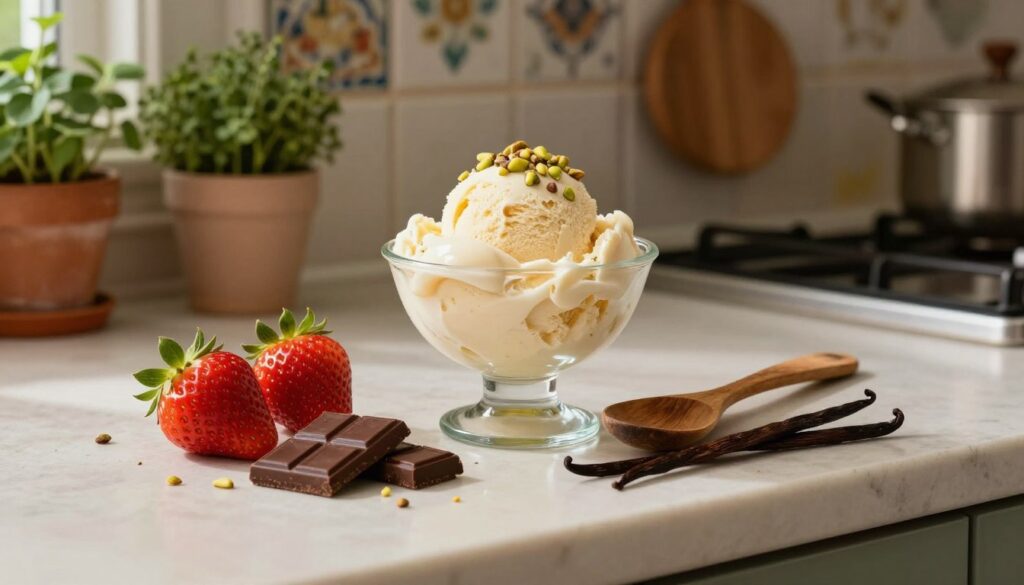
What Sets Gelato Apart from Traditional Ice Cream
The primary difference between these two desserts lies in the butterfat content. Traditional American ice cream relies heavily on cream, which creates a high-fat base that can sometimes mask subtle flavor profiles. In contrast, an italian gelato recipe typically uses more milk than cream, resulting in a lower fat content that allows the natural ingredients to shine.
Because there is less fat coating your tongue, the flavors in your dessert will taste much more vibrant and intense. This purity of flavor is exactly why enthusiasts prefer this style over heavier alternatives. When you prioritize high-quality milk, you notice the difference in every single spoonful.
The Role of Fat and Air in Texture
Texture is another defining characteristic that separates these frozen delights. American ice cream is churned at high speeds to incorporate a significant amount of air, which makes the final product light and fluffy. Authentic gelato is churned much more slowly, which minimizes the amount of air trapped inside the mixture.
This slow process results in a denser, more luxurious mouthfeel that feels incredibly smooth on the palate. By controlling the air and fat, you ensure that your homemade gelato recipe achieves that signature silky consistency. Understanding these scientific principles is the first step toward elevating your dessert game to a professional level.
Essential Ingredients for Your Homemade Gelato
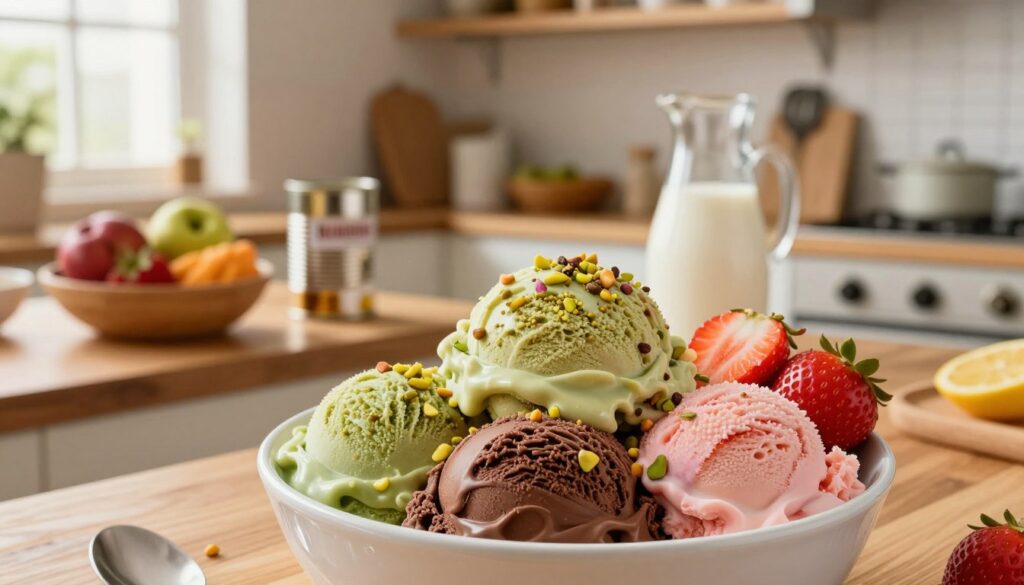
Achieving that signature silky texture in your kitchen depends entirely on the quality of your base components. When you prepare homemade gelato, every single element plays a vital role in the final mouthfeel and flavor profile. By selecting premium ingredients, you ensure a professional result that rivals your favorite local shop.
Selecting High-Quality Dairy and Milk Alternatives
The foundation of any great recipe is the liquid base. While many traditional recipes rely on heavy cream, you can achieve a luxurious consistency using high-quality whole milk. The natural proteins and fats in fresh, organic dairy provide the structure needed for a smooth scoop.
If you prefer plant-based options, look for high-fat alternatives like full-fat coconut milk or barista-style oat milk. These options mimic the viscosity of dairy effectively. Always choose products without excessive stabilizers to keep your homemade gelato tasting fresh and clean.
The Importance of Sugar Ratios for Smoothness
Sugar does much more than provide sweetness in your frozen desserts. It acts as a natural antifreeze, which is critical for preventing your mixture from turning into a solid block of ice. Balancing your sugar ratio ensures that the water content remains soft and scoopable even at low temperatures.
Using a mix of granulated sugar and glucose or honey can further improve the texture. These sugars have different molecular structures that help inhibit large crystal formation. This scientific approach is the secret to achieving that dense, elastic quality found in authentic Italian shops.
Flavor Enhancers and Natural Additives
Once your base is balanced, you can elevate the profile with natural additives. A touch of high-quality vanilla bean paste adds depth, while a pinch of sea salt can brighten the entire flavor spectrum. These small additions transform a simple base into a sophisticated treat.
Consider the following table to understand how different ingredients contribute to your final product:
| Ingredient | Primary Function | Impact on Texture |
|---|---|---|
| Whole Milk | Base structure | Provides creaminess |
| Granulated Sugar | Sweetness | Lowers freezing point |
| Sea Salt | Flavor balance | Enhances complexity |
| Vanilla Bean | Aromatic profile | Adds depth |
By carefully selecting these components, you set the stage for a successful batch of homemade gelato. Understanding these interactions allows you to experiment with confidence while maintaining the integrity of your dessert.
Gathering Your Kitchen Tools for Success
Equipping your kitchen with the right gear ensures that your homemade gelato turns out perfectly every time. Having your tools organized before you begin makes the entire process much smoother and more efficient. You will find that the right equipment helps you manage the custard base with confidence.
Choosing the Right Mixing Bowls and Whisks
When preparing your base, stainless steel bowls are your best friend. These bowls offer superior heat transfer, which is vital when you need to cool your mixture quickly to prevent unwanted ice crystals. A sturdy, balloon-style whisk is also essential for incorporating air and ensuring your ingredients are fully emulsified.
Using high-quality tools allows you to maintain a consistent texture throughout the preparation. Precision is key when you are working with delicate dairy components. Always ensure your bowls are clean and dry before you start mixing your ingredients.
Temperature Control with Kitchen Thermometers
A reliable digital thermometer is a non-negotiable tool for any home cook. It is absolutely essential for tempering eggs safely, as it allows you to monitor the heat levels with pinpoint accuracy. You want to reach the perfect temperature without accidentally scrambling your eggs.
By keeping a close eye on the thermometer, you ensure the custard base reaches the ideal thickness. This step is the foundation of a silky and smooth consistency. Never guess the temperature when you can measure it exactly for the best results.
Storage Containers for Optimal Freezing
Once your gelato is ready for the freezer, the type of container you choose matters significantly. You should opt for shallow, airtight containers to help maintain the perfect texture while the mixture rests. These containers allow the gelato to freeze more evenly, which prevents the formation of large, icy chunks.
Using a shallow vessel also makes it much easier to scoop your finished dessert later. Proper storage protects the delicate flavor profile of your creation from absorbing other odors in your freezer. Investing in a few quality containers will elevate your final product and keep it fresh for longer.
Preparing the Custard Base
A smooth, rich custard base serves as the foundation for every successful batch of homemade treats. When you follow a reliable gelato recipe, the quality of your base determines the final mouthfeel. Taking your time during this stage ensures a professional result that rivals any shop-bought version.
Tempering Eggs for a Silky Consistency
Tempering is the process of slowly adding hot liquid to your eggs without scrambling them. Start by whisking your egg yolks and sugar together until they become pale and thick. Slowly drizzle a small amount of your warm milk mixture into the yolks while whisking constantly.
This gradual increase in temperature prevents the proteins from seizing up. Once the eggs are warm, you can safely pour the mixture back into the main pot. This careful technique is vital for achieving that signature velvety texture in your gelato recipe.
Achieving the Perfect Thickness on the Stovetop
Cooking your base requires patience and a watchful eye. Keep your heat on low to medium-low to avoid burning the bottom of the pan. Stir the mixture continuously with a wooden spoon or a heat-resistant spatula.
You will know the custard is ready when it reaches the nappe consistency. This means the liquid is thick enough to coat the back of your spoon. If you run a finger through the coating, the line should remain clear and distinct.
Cooling Techniques to Prevent Crystallization
Rapid cooling is the final step to ensure your dessert stays smooth. Large ice crystals are the enemy of a creamy texture, so you must lower the temperature quickly. Place your saucepan into a larger bowl filled with ice and water to create an ice bath.
Stir the custard occasionally as it cools to keep the temperature uniform throughout. Once it reaches room temperature, cover the surface directly with plastic wrap to prevent a skin from forming. Proper cooling is a key secret to perfecting your gelato recipe at home.
The Science of Churning Without a Machine
Transforming a liquid custard into creamy gelato requires a disciplined approach to manual stirring. Since you are omitting the use of an electric ice cream maker, you must act as the machine yourself. This hands-on process is the secret to achieving that signature dense texture that makes gelato so incredibly satisfying.
The Manual Stirring Method Explained
The primary goal of churning is to incorporate air while simultaneously breaking up ice crystals as they form. When you stir by hand, you are physically forcing air bubbles into the custard base. This manual agitation prevents the mixture from freezing into a solid, icy block.
Use a sturdy silicone spatula to scrape the sides and bottom of your container thoroughly. By constantly moving the mixture, you ensure that the freezing process remains uniform throughout the entire batch. This consistent movement is vital for a smooth, professional mouthfeel.
Using the Freezer to Control Ice Crystal Formation
Your freezer plays a critical role in the quality of your final dessert. Because home freezers are often colder than professional gelato machines, the mixture can freeze too quickly if left unattended. Rapid freezing leads to large, crunchy ice crystals that ruin the texture.
To combat this, you must monitor the temperature closely. Placing your container in the coldest part of the freezer helps, but you must balance this with frequent stirring. Patience is your best friend during this stage of the process.
Timing Your Intervals for Maximum Creaminess
To mimic the action of a professional machine, you should follow a strict schedule. We recommend checking and stirring your gelato every 30 minutes for the first three hours. This disciplined schedule ensures that the texture remains velvety rather than grainy.
The following table outlines the recommended workflow for achieving the best results at home:
| Time Interval | Action Required | Goal |
|---|---|---|
| 0 – 60 Minutes | Stir every 15 minutes | Initial cooling and aeration |
| 60 – 180 Minutes | Stir every 30 minutes | Break up forming ice crystals |
| Final 2 Hours | Leave undisturbed | Set the final structure |
By adhering to these intervals, you maintain control over the density of your gelato. This method guarantees a luxurious, dense finish that rivals any shop-bought treat. Enjoy the process of crafting your own masterpiece from scratch.
Flavor Variations and Creative Mix-ins
Customizing your dessert allows you to bring the authentic gelateria experience home. Once you have mastered the foundational custard, you can experiment with endless flavor combinations. A high-quality gelato recipe serves as the perfect canvas for your culinary creativity.
Classic Stracciatella and Chocolate Variations
To create a perfect stracciatella, wait until your mixture is nearly frozen before adding chocolate. Melt high-quality dark chocolate and drizzle it slowly into the bowl while stirring constantly. This technique creates delicate, thin ribbons of chocolate that snap when you take a bite.
Avoid adding solid chocolate chips early in the process, as they often become unpleasantly hard. Instead, use a grater to create fine shavings that melt smoothly on the tongue. This simple trick elevates any standard gelato recipe into a professional-grade dessert.
Incorporating Fresh Seasonal Fruits
Fresh fruit adds a vibrant brightness to your frozen treats, but water content is a major concern. To prevent icy textures, always cook your fruit down into a thick puree or reduction before adding it to the base. This process removes excess moisture while concentrating the natural sugars and flavors.
For berries, strain the seeds to ensure a silky mouthfeel. If you prefer chunks of fruit, macerate them in a little sugar for an hour and drain the liquid before folding them in. This ensures your gelato recipe remains creamy rather than icy.
Adding Nuts and Sauces Without Ruining the Texture
Timing is everything when you want to maintain the crunch of nuts or the swirl of a sauce. Always toast your nuts lightly to enhance their aroma and keep them crisp. Fold them in during the final stage of the freezing process to ensure they stay perfectly distributed throughout the batch.
When adding sauces like caramel or fruit coulis, create distinct ribbons by swirling them gently with a spatula just before the final freeze. Do not over-mix, or you will lose the beautiful visual contrast. Following these steps ensures your gelato recipe looks as good as it tastes.
Troubleshooting Common Gelato Challenges
Even the most skilled home cooks occasionally face challenges when crafting frozen desserts. If your latest batch did not turn out as creamy as you hoped, do not feel discouraged. Most issues stem from simple variables that you can easily adjust in your next attempt.
Fixing Grainy or Icy Textures
A grainy or icy texture usually indicates that large ice crystals formed during the freezing process. This often happens if the mixture was not churned enough or if the fat content was too low. To improve the texture, ensure your base is well-chilled before you begin the freezing process.
You can also try these quick fixes to improve your results:
- Increase the fat content by using a higher ratio of heavy cream to milk.
- Churn more frequently during the manual freezing process to break up developing crystals.
- Use a stabilizer like a small amount of cornstarch or commercial gelato stabilizer to improve body.
Adjusting Sweetness and Density
Sugar does more than just provide sweetness; it is essential for lowering the freezing point of your mixture. If your gelato feels too dense or hard, you may need to slightly increase your sugar ratio. Conversely, if it is too soft or overly sweet, reduce the sugar in your next batch.
Keep in mind that different sugars behave differently. Using a mix of granulated sugar and dextrose can help you achieve a perfectly smooth consistency without making the dessert cloying.
Preventing the Gelato from Becoming Too Hard
Homemade gelato often freezes harder than commercial versions because home freezers are much colder than professional display cases. If your batch is difficult to scoop, consider adding a tablespoon of high-proof alcohol, such as vodka, to the mixture. The alcohol does not freeze, which helps keep the final product softer and easier to serve.
| Problem | Likely Cause | Simple Solution |
|---|---|---|
| Icy Texture | Low fat or slow freezing | Add more cream and stir often |
| Too Hard | Too little sugar or alcohol | Add a splash of vodka |
| Too Soft | Too much sugar | Reduce sugar by 10% |
By monitoring these small details, you will gain the confidence to refine your technique. Every batch provides a new opportunity to learn and improve your homemade gelato skills.
Serving and Storing Your Homemade Gelato
Achieving the perfect scoop of your homemade treat requires more than just a great italian gelato recipe. How you handle your dessert after it leaves the freezer determines the final mouthfeel and flavor intensity. By following a few simple steps, you can ensure every serving is as smooth as the first.
The Ideal Serving Temperature for Best Flavor
Gelato is best enjoyed at a slightly warmer temperature than standard ice cream. Serving it too cold masks the delicate flavors and makes the texture feel dense or hard. Allowing your container to sit at room temperature for about five to ten minutes before scooping is the secret to success.
This brief rest period allows the fats to soften, releasing the aromatic notes of your ingredients. You will notice a significant difference in the creamy consistency that defines a high-quality italian gelato recipe. Always use a warm, dry scoop to glide through the base with ease.
Proper Storage to Maintain Freshness
To keep your dessert fresh, you must protect it from the harsh environment of your freezer. Air exposure is the primary enemy, as it leads to unwanted ice crystals and freezer burn. Always press a piece of plastic wrap directly against the surface of the gelato before sealing the container lid.
Using shallow, airtight containers helps the mixture freeze and thaw more evenly. If you plan to store your creation for more than a few days, place the container in the back of the freezer. This area maintains a more consistent temperature, which is vital for preserving the integrity of your italian gelato recipe.
How to Re-soften Gelato After Deep Freezing
If your dessert becomes too firm after a long stay in the deep freeze, do not panic. Simply move the container to the refrigerator for about 15 minutes to gently temper the mixture. This gradual transition is much safer than using a microwave, which can melt the edges and ruin the texture.
Once the edges begin to soften, use a sturdy spoon to fold the mixture gently. This action helps redistribute the temperature and restores that signature, silky scoopable consistency. Your patience during this process will be rewarded with a professional-grade dessert experience.
| Action | Recommended Time | Goal |
|---|---|---|
| Tempering | 5-10 Minutes | Optimal Scoopability |
| Refrigeration | 15-20 Minutes | Deep Freeze Recovery |
| Surface Protection | Continuous | Prevent Freezer Burn |
Mastering the Homemade Gelato Process
Transitioning from a beginner to a confident maker of homemade gelato is a rewarding culinary journey. As you gain experience, you will find that the process becomes second nature, allowing you to focus on creativity rather than just following instructions.
Developing Your Own Signature Recipes
The best way to grow as a maker is to keep a simple experiment journal. Record the ratios of sugar, milk, and cream you use, along with any unique flavor additions like fresh herbs or spices.
By tracking your results, you can identify exactly what creates the perfect texture in your specific kitchen environment. Do not be afraid to adjust your base recipe to suit your personal preferences for sweetness or density.
Scaling Batches for Parties and Gatherings
When you need to prepare larger quantities for friends or family, simple multiplication is your best friend. However, remember that larger batches may take longer to cool down, which can affect the final texture of your homemade gelato.
Always ensure your freezer has enough space to accommodate multiple containers. It is often better to churn two smaller batches rather than one massive one to maintain the ideal consistency.
| Batch Size | Milk (Cups) | Sugar (Cups) | Churn Time |
|---|---|---|---|
| Small (Family) | 2 | 0.5 | 30 Mins |
| Medium (Party) | 4 | 1.0 | 45 Mins |
| Large (Event) | 6 | 1.5 | 60 Mins |
Refining Your Technique Over Time
Mastering this craft is a journey of continuous improvement that rewards patience. Every time you prepare a batch of homemade gelato, you learn something new about how ingredients interact under cold temperatures.
Stay curious and keep testing new methods to see how they impact your final product. With time, you will develop an intuitive sense for when your mixture is ready to freeze, ensuring a professional result every single time.
Conclusion
Crafting a perfect dessert at home transforms your kitchen into a personal artisanal shop. You now possess the skills to create a rich, velvety treat without relying on expensive appliances.
Mastering a reliable italian gelato recipe opens a world of culinary possibilities. You can experiment with bold flavors or stick to timeless classics that delight your family and friends.
Your journey into frozen desserts relies on patience and attention to detail. Every batch you stir by hand builds your confidence and refines your unique style in the kitchen.
Share your favorite flavor combinations with others to spread the joy of homemade sweets. We encourage you to keep exploring new ingredients and techniques to elevate your craft.
Pick up your whisk and start your next batch today. A delicious italian gelato recipe is the perfect way to turn any ordinary evening into a special celebration.
FAQ
Can I really achieve a professional-quality italian gelato recipe without an expensive machine?
Absolutely! While professional shops use batch freezers, you can recreate that signature dense and silky texture at home using a manual stirring technique. By using high-quality ingredients like Organic Valley whole milk and following a disciplined freezing schedule, your homemade gelato will rival any local gelateria.
What is the primary difference between this gelato recipe and standard American ice cream?
The main differences lie in butterfat and air. Gelato uses more milk and fewer eggs (or just yolks), leading to a lower fat content that allows flavors to pop. Additionally, because it is stirred more slowly and less frequently than ice cream is churned, much less air is incorporated, resulting in a richer, denser mouthfeel.
Why is the sugar ratio so critical when making homemade gelato?
In any gelato recipe, sugar does more than just provide sweetness; it acts as a natural antifreeze. Using the correct ratio of C&H Cane Sugar prevents the water in the milk from forming large ice crystals, ensuring your dessert remains smooth and scoopable rather than turning into a solid block of ice.
What specific kitchen tools do I need to ensure success?
You don’t need a machine, but a few basics are essential. A KitchenAid stainless steel whisk and a heavy-bottomed saucepan are vital for the custard. For precision, a ThermoWorks digital thermometer helps you temper eggs perfectly, and shallow Glasslock or airtight containers are best for even freezing.
How do I prevent my custard base from curdling or becoming lumpy?
The secret is tempering the eggs. Slowly whisking small amounts of your hot milk mixture into the egg yolks before adding them back to the main pot prevents them from scrambling. Once combined, cook the base over medium-low heat until it is thick enough to coat the back of a spoon.
How often should I stir the mixture while it is in the freezer?
To mimic a professional churn, you should vigorously stir your homemade gelato every 30 minutes for the first two to three hours. Using a sturdy fork or a rubber spatula to break up ice crystals at the edges of the container is the key to maintaining a velvety Italian-style texture.
Can I add fresh fruit to my italian gelato recipe without making it icy?
Yes, but you must be careful with water content. It is best to cook down your fruit into a concentrated puree or jam first. For a classic Stracciatella, drizzle melted Ghirardelli dark chocolate into the mixture during the final stages of freezing so it shatters into delicate, crunchy flakes.
Why did my gelato turn out hard, and how can I fix it?
Home freezers are much colder than professional gelato display cases. If your gelato recipe results in a firm texture, simply let the container sit at room temperature for about 10 to 15 minutes before serving. This allows the fats to soften slightly, bringing back that creamy, scoopable consistency.
How long can I store my homemade gelato in the freezer?
Because homemade gelato lacks the preservatives found in commercial brands, it is best enjoyed within three to five days. To maintain freshness, press a piece of plastic wrap directly onto the surface of the gelato before sealing the lid to prevent freezer burn.